Featured Stage
Fruit Ninja
New Games




What Is Fruit Ninja?
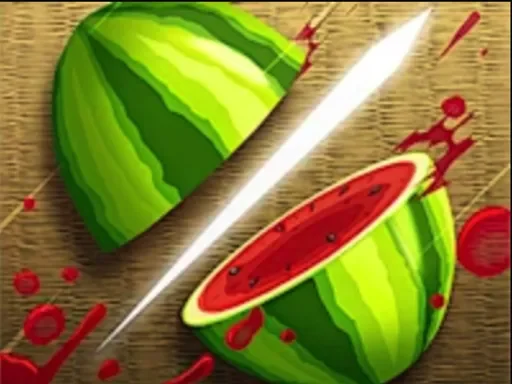
Fruit Ninja is a browser-friendly arcade slicing game where you swipe through rising fruit, dodge bombs, and chase fast combo scores in short, repeatable runs. The appeal is immediate because the game does not bury its objective under menus or tutorials. Fruit bursts onto the screen in clean arcs, your cursor or fingertip becomes the blade, and every successful swipe produces instant visual feedback. That makes the game easy to understand in a few seconds, but much harder to master when the screen gets crowded and the safe line is no longer obvious.
The browser version on Play Happy Glass keeps that same recognizable loop. You open the page, start slicing, and quickly fall into a pattern of reading arcs, choosing the safest route, and deciding when not to swing. That last part matters more than many new players expect. Fruit Ninja rewards activity, but it punishes reckless movement. Strong runs come from precision, timing, and restraint rather than nonstop motion.
The modern browser presentation of Fruit Ninja also emphasizes clean swipes, combo building, and bomb avoidance, which matches the core identity that made the game popular in the first place. Even away from its original mobile context, the formula still works because each session is readable, fast, and satisfying.
How a Browser Session Usually Flows
Read the launch pattern before chasing points
At the start of a round, fruit rises from the bottom of the play area in waves. Some pieces travel in neat clusters, while others are staggered to tempt you into awkward diagonal cuts. A good opening habit is to spend a fraction of a second reading the pattern before your first swipe. If two or three fruits are converging near the top of their arcs, you can often clear them with one short line and begin the round with an efficient combo instead of a messy exchange.
Bombs turn every decision into risk management
Bombs are not just hazards. They shape the geometry of the board by blocking the line you would most like to draw. That is why Fruit Ninja feels more strategic than a simple reaction test. You are constantly balancing score opportunities against survival. Sometimes the best move is an aggressive sweep through a tight cluster. At other times, the smartest choice is to ignore an almost-perfect combo because a bomb is sitting half a swipe away from disaster.
Consistency beats flashy overreach
High scores usually come from reliable two-fruit and three-fruit cuts rather than wild attempts to catch every target on screen. When players lose control, it is often because they start tracing oversized curves that drift into bombs or leave the cursor in a bad place for the next wave. Short, deliberate lines are easier to stop, easier to redirect, and easier to repeat under pressure.
Controls, Combos, and Practical Technique
On desktop, you play with the mouse by clicking or dragging across the fruit path. On mobile or tablet, touch controls make the same motion feel natural because the whole game is based on swiping. The important detail is not the device but the quality of the motion. Clean slicing in Fruit Ninja is less about speed than shape. If your line starts late, runs too long, or curves without a purpose, the game quickly feels chaotic.
A useful trick is to aim near the apex of a fruit's arc. At that moment the motion is easier to predict, and several pieces often drift close enough for one efficient cut. This is also where combo play becomes more manageable. Instead of reacting to each fruit separately, you start seeing patterns that can be cleared with one compact gesture. That shift from target-by-target slicing to pattern recognition is where scores begin to improve.
Another practical habit is to reset your hand position after every swipe. New players often continue moving from the last cut and accidentally turn a safe slice into an uncontrolled follow-through. Re-centering makes the next decision calmer. If a bomb appears in the middle of a promising cluster, that small reset also gives you space to skip the risky line and wait for a cleaner opening.
From 2010 Mobile Hit to Browser Staple
Fruit Ninja did not become famous by accident. Halfbrick's official history states that the game launched on the iPhone App Store on April 21, 2010. By September 17, 2010, Halfbrick had announced the Android release, and in early November 2010 the studio rolled out Arcade Mode as a major update. Those dates matter because they show how quickly the game moved from a simple mobile release to a much larger arcade brand.
The core idea was strong enough to travel well across devices. You did not need a long manual to understand it, and the feedback loop was satisfying from the very first round. Slice fruit, avoid bombs, chase a better score, and try again. That design economy helped Fruit Ninja spread from phones and tablets to browser portals, where it still feels natural because short sessions and immediate restarts fit web play perfectly.
Its long-term popularity also comes from how fair the game feels. When a run ends, the reason is usually obvious. You swung too wide, chased a late fruit, or ignored a bomb while trying to preserve a combo. The lesson is visible, so failure encourages another attempt instead of confusion. That is a major reason the game still holds attention years after its original release.
Score-Building Habits That Actually Help
Favor line efficiency over panic speed
Players who rush every fruit often end up with lower scores than players who stay selective. A short line that cuts two targets cleanly is more valuable than a frantic sweep that catches one fruit and forces your cursor into a bomb lane. Efficiency keeps the screen readable and your next action available.
Use bombs as boundaries
Instead of thinking of bombs only as things to avoid, treat them like temporary walls that divide the safe slicing space. Once you see them that way, it becomes easier to route your cuts around them and accept smaller combos when necessary. That mental model reduces greedy mistakes.
Recover your rhythm after a messy wave
Not every pattern deserves an ambitious answer. If the screen becomes cluttered, return to a simple rule: one safe cut, then reset. Fruit Ninja often swings back from chaos to clarity within a second or two. Trying to force control immediately is what causes many avoidable losses.
FAQ
Is Fruit Ninja free to play online?
Yes. On this site, you can play Fruit Ninja in your browser without installing a separate app.
What is the main goal in Fruit Ninja?
Your goal is to slice as much fruit as possible, build efficient combos, and avoid hitting bombs that can end the run or ruin your score.
How do I control Fruit Ninja on desktop and mobile?
On desktop, use the mouse to click and drag through the fruit path. On mobile or tablet, swipe with your finger using the same short, controlled motion.
Why do experienced players prefer shorter swipes?
Shorter swipes are easier to stop, easier to aim, and less likely to drift into a bomb. They also make it easier to recover your hand position for the next wave.
When should I go for combos?
Go for combos when the fruit arcs line up naturally and the path is clear. If a bomb crowds the route, taking a smaller safe cut is usually the better decision.
Who made Fruit Ninja, and when was it first released?
Fruit Ninja was created by Halfbrick and officially launched on the iPhone App Store on April 21, 2010, before expanding to more platforms later that year.

Comments
Loading comments…